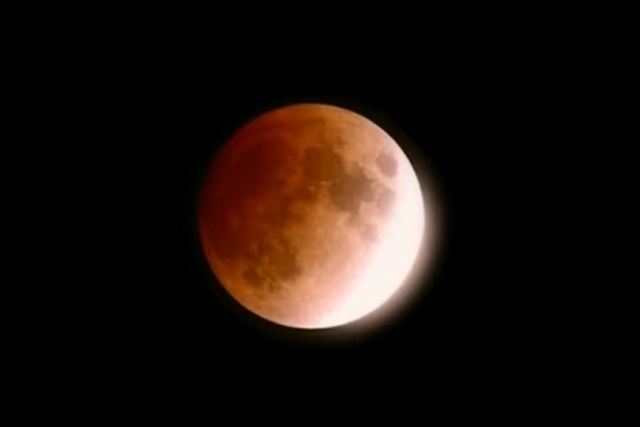
The Philippine Atmospheric, Geophysical and Astronomical Services Administration (PAGASA) has announced that the eclipse will begin at 11.50pm on Monday, August 7, and will end at 4.51am the next morning.
“It will be visible in the Philippines,” a PAGASA statement said. “In Manila, the moon will rise at 6.03pm and will set at 5am.”
NASA has said that the partial eclipse will be visible across the world, but estimated that it wouldn’t last longer than two hours.
For those underwhelmed by this week’s spectacle, NASA says that a full eclipse of the moon will be visible in the Philippines on January 31 next year.
A total solar eclipse is also due this month, on August 21 — but to witness this you’d need to travel to Hawaii or beyond.
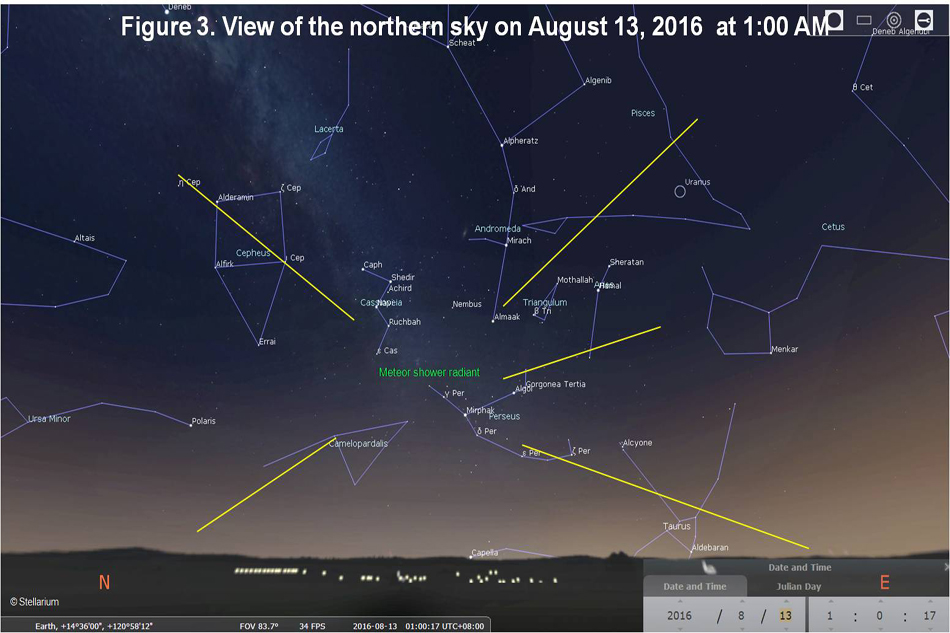
PAGASA says that, weather and moonlight permitting, at least 50 or more meteors should be visible during peak hours.
“The Perseids meteor shower radiate out from the constellation Perseus, which is located in the eastern horizon during August,” the weather bureau said.
While the meteor shower would most likely be visible to the naked eye, it is best viewed on higher ground where there is little or no artificial light.
Anyone who misses the display can watch NASA’s livestream here.
The Perseid meteors, so called because they appear to come from the constellation Perseus, are actually remnants of the comet Swift-Tuttle, which has a 133-year orbit around the sun.
Swift-Tuttle last appeared in 1992 and will return in 2126.